
EDUCATION
Education is the foundation of treatment.
Educational Articles
What is holistic science or holistic medicine?
What is yogatherapy?
What is yogatherapy in motion system?
Educational Courses
- Corrective Yoga & Postural Correction Exercises
- Pranayama & Pulmonary Exercise
- Yogatherapy in Motion System
Education Included
- Holistic Yoga School
- Certificate Review
Director of Education: Sahar Yazdani
Our Education Programs are available in three forms:
- Accredited workshops and training courses by the Holistic Yoga Therapy Institute related to skills and the training of yoga therapists in the five strategies
- Approved Professional Development (APD) courses by the International Yoga Therapists Association (IAYT)
- Specialized workshops related to the annual research theme
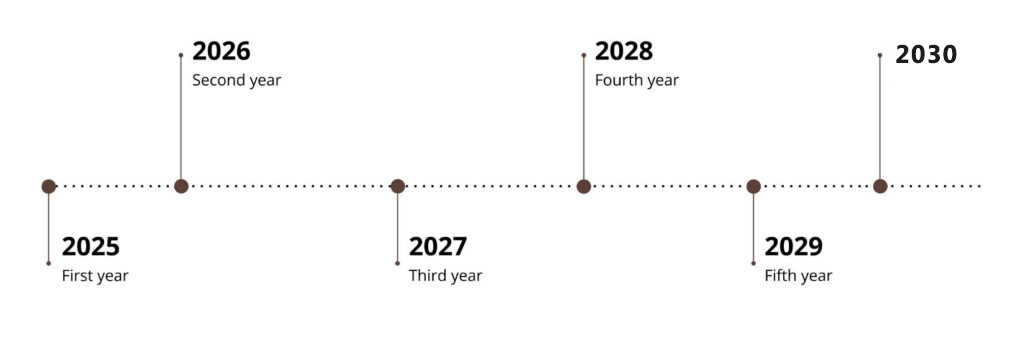
Five-Year Strategic Roadmap Forecast
Types of Yoga Therapy
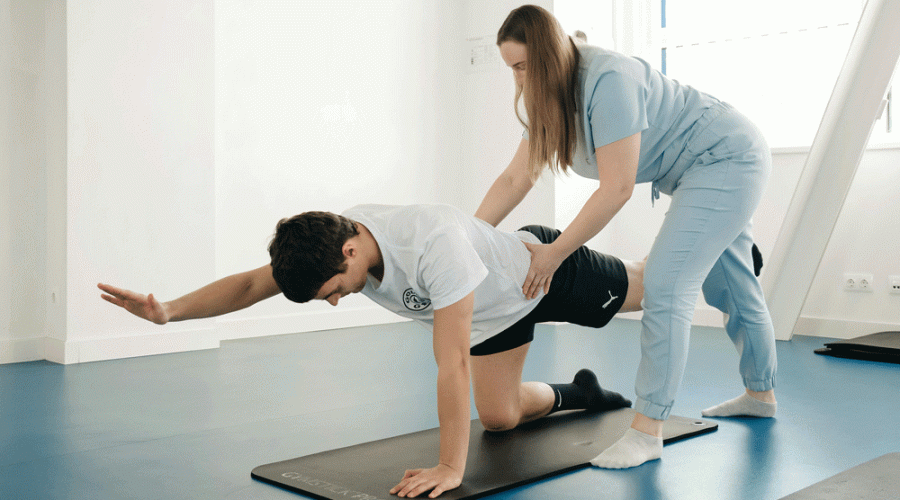
Yoga therapy encompasses multiple approaches, each addressing specific physical, physiological, and psychological needs. While we are proficient in all aspects of yoga therapy, our primary focus is on the motion system, which includes the nervous system, muscles, bones, and joints to enhance mobility, alignment, and functional strength.

1st Approach
Motion system(nerve, muscle, bone and joint)
2nd Approach
Immune System And metabolic, Weight control, fitness (obesity and weight loss), and biochemical system, and Digestive System
3rd Approach
Urinary System, pregnancy and sexual dysfunction, and Women (pre-pregnancy, prepartum, postpartum)
4th Approach
Cardiovascular, respiratory, and blood
5th Approach
Mind, Soul, Energy, Awareness, Meditation
Our primary commitment lies in the Motion System—an approach that integrates insights from orthopedics, neurology, and rheumatology. We focus on postural alignment, mobility, and structural integrity to enhance movement and support holistic well-being.
Yoga Therapist Training Programs according to the IAYT Curriculum
CHRONIC PAIN
Low-back pain
Arthritis
PMS
Fibromyalgia
Etc
NEUROLOGIC ISSUES
Stroke effects
MS
Parkinson’s
TBI
MENTAL HEALTH
Anxiety
Depression
PTSD
Insomnia
ILLNESS SUPPORT
Cancer
Diabetes
Heart disease
HEALTHY AGING
Osteoporosis
Balance &
Fall prevention
Comparison of a Yoga Teacher and a Yoga Therapist in terms of Education according to IAYT
| YOGA TEACHER (RYT 200) | YOGA THERAPIST (C-IAYT) | |
|---|---|---|
|
Yoga philosophy/foundations |
|
|
|
Basic anatomy & physiology |
|
|
|
Practice teaching, assisting a teacher |
|
|
|
Psychology, additional biomedicine |
|
|
|
Adaptation of yoga tools to individual needs |
|
|
|
In-depth anatomy & pathophysiology |
|
|
|
Extensive clinical practicum |
|
|
|
References: (click on links) |
Educational Courses

Corrective yoga and Corrective exercises for posture
The Importance of Corrective Exercise in Today’s World
Complete list of postural deformities. Learn more...
Complete list of musculoskeletal disorders by body region:
-
Head and Neck
- Torticollis
- Short neck
- Loss of cervical curve (Straight neck)
- Forward head posture
- Temporomandibular joint (TMJ) disorder
- Facial profile deformity Shoulders, Scapula, and Chest
- Uneven shoulders
- Drooping shoulders
- Elevated scapula (Sprengel's deformity)
- Winged scapula
- Chest deformities Spine and Trunk
- Spinal structure
- Vertebral anatomy
- Spinal stabilizing muscles
- Factors affecting posture
- Kyphosis
- Thoracic kyphosis (based on curve severity)
- Flat back
- Sway back
- Hyperlordosis
- Flat lumbar spine
- Inclined lumbar spine
- Scoliosis (lateral curvature of the spine)
- Types of scoliosis
- Complications of scoliosis
- Upper crossed syndrome
- Lower crossed syndrome
- Layer syndrome
- Muscle imbalance syndrome
- Postural syndrome Upper Limb (Arm, Elbow, Wrist, Hand)
- Cubitus valgus
- Cubitus varus
- Claw hand
- Mallet finger
- Trigger finger
- Boutonniere deformity
- Swan neck deformity
- Claw-like fingers
- Syndactyly (fused fingers)
- Polydactyly (extra fingers)
- Z-shaped finger
- Dupuytren’s contracture
- Interphalangeal joint deformities Pelvis and Lower Limb
- Pelvic alignment and lateral deviation
- Congenital hip dislocation
- Tight adductor muscles of the hip
- Congenital tightness of hip abductors
- Coxa vara
- Coxa valga
- Torsional deformities of pelvis, femur, and tibia
- Leg length discrepancy Knees
- Genu varum (Bow legs)
- Genu valgum (Knock knees)
- Genu flexum (Knee flexion deformity)
- Genu recurvatum (Hyperextension of the knee)
- Knee ankylosis (Stiff knee) Foot and Toes and Ankle
- Flat foot
- High arch foot (Pes cavus)
- Equinus foot
- Calcaneus foot
- Splaying foot
- Clubfoot (Equinovarus)
- Foot valgus (outward deformity)
- Foot varus (inward deformity)
- Metatarsal rotation
- Toe rotation
- In-toeing (medial toe position)
- Hallux valgus (Bunion)
- Hammer toe
- Claw toe
- Ingrown toenail