
Compiled by: Dr. Nader Afravi
Naderafravi@gmail.com
International Yoga, Meditation, and Ayurveda Teacher (Yogatherapist)
Acupuncture Practitioner, Hydrotherapist, Massage Therapist
Founder and Director of the International Holistic Yogatherapy Institute (IHYTI)
Member of the International Association of Yoga Therapists (IAYT)
www.ihyti.com
Holistic Medicine (Holistic Health Sciences)
Introduction
Holistic Medicine:
Holistic medicine is a concept in the medical profession in which all aspects of people’s needs—including psychological, physical, and social—must be considered and viewed as a whole. As defined above, this comprehensive approach in medical science is widely accepted.
Various definitions of holistic medicine claim that disease arises as a result of physical, emotional, spiritual, social, and environmental imbalances in the body. In holistic medicine, it is believed that the spiritual aspect of the patient should also be taken into account in treatment.
Some of the general recommendations of holistic medicine include:
Natural diet and herbal remedies
Nutritional supplements
Exercise, yoga
Rest
Psychological counseling
Reflection, meditation
Breathing exercises
Acupuncture
Homeopathy
Massage therapy
Criticism
However, in holistic medicine, apart from the effects of placebo-like treatments, there is no published scientific study proving that holistic medicine can treat any known disease. The American Cancer Society recommends that if holistic medicine is to be used at all, it should only be used alongside conventional medicine and not as a replacement.
In the continuation of this article, I will provide a brief introduction and overview of the fields of holistic science or holistic medicine, and, based on my expertise, I will introduce a number of them. May it prove useful.
Ayurveda
Acupuncture
Massage therapy
Hydrotherapy
Rolfing therapy
Organotherapy
Pyramid therapy
Radionics therapy
Osteopathy
Psionic therapy
Radiesthesia therapy
Biofeedback therapy
Negative ion therapy
Shiatsu massage therapy
Megavitamin therapyBach therapy
Nutritional therapy
Holistic approach to life
Chiropractic therapy
Alexander technique therapy
Hypnotherapy
Energy therapy
Aromatherapy Salt therapy
Number therapy
Equine therapy
Nature therapy
Herbal therapy
Homeopathy
Sound therapy
Gestalt therapy 2
Functional Mechanism of Holistic Medicine
Before defining and explaining some specific practices, it is important to understand that holistic medicine (or holistic health sciences) shares a common functional mechanism, which consists of three components: emotional health, physical hygiene, and spiritual development.
In fact, according to ancient human teachings, their analysis, and alignment with modern reasoning—especially physiological and pathological sciences—it is understood that whenever these three main components are in balance, a person is considered healthy from the perspective of holistic health sciences. Therefore, attention to these three components, by both the practitioner and the patient, is extremely important.
One might call holistic health sciences or holistic medicine a kind of “art of balance”; a balance in the three components:
Emotional health
Physical hygiene
Spiritual development
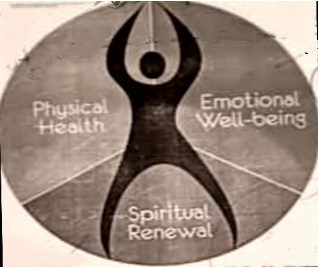
Schematic of the Balance of the Three Main Components in Holistic Medicine
International Holistic Yogatherapy Institute (IHYTI)
www.ihyti.com
Yoga therapy
Yoga is a system of individual self-help for maintaining health and achieving spiritual development.
Yoga is described as a method for controlling the waves of thought or the mind. It is a systematic approach to attaining unity with existence, and a school of mental meditation that encourages and assists human beings in reaching their highest potential and bringing that potential into actuality.
How does this method work?
Distinguished yoga masters, over the course of centuries, studied the subtleties and physical states of the human body, and then developed postures and movements that can be easily taught, performed, and repeated. These postures and movements, which Hindus call asanas, produce predictable effects on the functions of the human body, preventing the emergence of pain and illness, or helping to treat them.
How is this method practiced?
The domain of yoga asanas is vast, and their postures and movements are diverse.
Each yoga asana consists of three main components:
a physical movement, a process of thought control, and a process of breath control.
The circulation process of the human body can be strengthened through yoga practices, and the speed of blood flow can be increased or decreased. These exercises also stimulate the pituitary gland beneath the brain, which is the control center for the endocrine or hormonal system. Yoga experts emphasize that breathing is the basis of all human life—not only because it delivers oxygen to the body, but also because it regulates and strengthens the autonomic nervous system and provides it with vital energy.
One of the most interesting effects of yoga on the human mind and body is the change it produces in brain waves.
What is the application of this method?
This method is useful for the prevention and treatment of schizophrenia, nervous restlessness, behavioral disorders and attention deficiency in children and adolescents, anxiety, obsession, depression, back pain, indigestion, chronic allergies, high blood pressure, shortness of breath, migraine headaches, weakness and general fatigue, numbness and coldness in the hands and feet, various types of rheumatism, joint problems, hormonal deficiencies, and several other conditions.
What criticisms are directed toward this method?
It should be noted that regular and long-term practice of yoga can produce physical and psychological changes in the body, and unsupervised personal attempts may cause harm instead of benefit. If one seeks a definite cure for certain pains and neuropsychological disorders and diseases through yoga, one must be prepared to find a refined and qualified master and practice under their guidance for a long period.
Ayurveda
Ayurveda is a body of knowledge gradually obtained—or, more precisely, discovered—by Indian scholars and spiritual practitioners over thousands of years, primarily through meditation and introspection.
Ayurveda is a form of holistic and integrative medicine. Followers of this medical system agree on one fundamental principle:
The basis of human existence is a kind of cosmic energy that is intelligent, and therefore may also be called cosmic consciousness.
This energy manifests in masculine and feminine forms, somewhat similar to the Chinese concepts of yang and yin.
The purpose of Ayurveda is to harmonize the inner energies of the human body with the changing energies of the environment, and to maintain the natural energetic balance of the whole human being.
Ayurveda believes that the human energetic or quantum body is in fact the body of complete consciousness and intelligence—a consciousness so fine and precise that it perceives everything and responds to all aspects of the environment, even the slightest thoughts and emotions of others.
The human quantum energy body functions like a software program that shapes and controls our physical body.
Maintaining the natural balance of this energy body is the key and foundation of health.
In Ayurveda, evaluating a patient’s background includes not only exploring their life history, conducting a full physical examination, and assessing their mind and emotions, but also the following:
attention to their socioeconomic status, and examining their astrology to determine their human type and potential vulnerabilities.
Laboratory tests of blood, urine, sweat, saliva, sputum, and the patient’s voice.
Before carrying out the main treatment, an Ayurvedic physician usually performs one or several of the following procedures on the patient or asks the patient to perform them: the use of strong laxatives or bloodletting, fasting, complete abstinence from food for a certain period, or abstaining from certain types of foods for a long time or permanently (hot and cold baths, cleansing or disinfecting vegetarian diets for the digestive system and blood, skin-restoring oils, and so on).
Afterward, herbal medicines are given to the patient to restore balance and harmony among all types of tissues, systems, and bodily energies.
This therapeutic method also recognizes the value of non-pharmaceutical treatments—or, in other words, non-material remedies—and on this basis makes use of chanting, yogic breathing, special ritual practices, and other established ancient methods in treatment. In some cases of neuropsychological disorders, it also employs meditative practices.
What is the application of this method?
Ayurvedic medicine is active not only in internal medicine, dermatology, and neuropsychology, but also in all other branches of medicine. For example, it includes branches for obstetrics and gynecology, women’s disorders, pediatrics, psychology, and even surgery.
Another branch of Ayurveda that has recently gained recognition in modern Western medicine is the field of sexual disorders.
Many other complementary medical methods—such as homeopathy, color therapy, herbal therapy, sound therapy, light therapy, gemstone therapy, radiesthesia, oxygen therapy, thought therapy, hydrotherapy, nature therapy, and others—have in some way drawn from Ayurveda, accompanied it, or originated from its fundamental principles.
It should not be forgotten that aromatherapy and nutritional therapy have also been so. Ayurveda is in fact a lifestyle system that places strong emphasis on the potential and unseen energies of the human body.
Acupuncture
Acupuncture is based on the principle that there is a kind of neural connection between the internal organs of the body and the external surface of the body. When an organ becomes diseased or a body part becomes painful, certain locations on the surface of the body—or more precisely, under the skin—become more sensitive. These locations are called acupuncture points.
Acupuncture stimulates these points with special needles in such a way that the activity of those points is regulated, thereby healing the diseased organ, relieving the patient’s pain, causing anesthesia, or producing other beneficial effects.
What is the historical development of this method?
Acupuncture works on the principle that in all diseases, whether physical or mental–emotional, certain sensitive points appear on the surface of the body and disappear once the disease improves or is cured. These sensitized points in illness are called acupuncture points.
How does this method work?
Pressure on certain specific points of the body is linked to particular pain patterns, and short, strong stimulation of these points with needles produces long-lasting pain relief.
In response to acupuncture, the human brain produces a group of natural pain-relieving substances called endorphins.
Another part of traditional Chinese medicine that is integrated with acupuncture is pulse diagnosis. Feeling the patient’s pulse is actually the foundation of diagnosis in all branches of traditional Chinese medicine. Pulse diagnosis in traditional Chinese medicine is so extensive, subtle, and precise that it can even correctly identify the patient’s past illnesses.
In the pulse of the wrist or the carotid artery of the patient, as many as fourteen different detectable qualities may be present.
Some may possess them, but many acupuncture practitioners believe that five or six different types of pulses are the total number that can be detected in a short examination session.
Method of application:
Acupuncture points are usually stimulated with special needles. Most experienced Chinese practitioners say that the best therapeutic results are produced by needle stimulation. Ancient Chinese texts describe about fifty different ways of inserting the needle, but once the needle has been inserted into the correct point, only six principles play a role in the effectiveness of acupuncture stimulation:
Sharpness of the needle tip
The angle of needle penetration
The depth to which the needle is inserted
The amount of movement (vibration) of the needle at the point
The length of time the needle remains in the point
The number of treatment sessions
When the practitioner has precisely located the point, he inserts the needle and leaves it there for a few seconds to several minutes.
Diseases treatable by acupuncture:
This method is used for eliminating kidney stones, advanced arthritis, headaches, acute respiratory diseases, acute rheumatism, menstrual problems in women, digestive organ disorders, various nervous system disorders, and different types of pain.
If the underlying conditions that produce the symptoms of a disease are incurable, then acupuncture treatment will be ineffective.
Hydrotherapy
Using water to maintain and strengthen health and to treat pains and diseases is called hydrotherapy.
How is it performed?
Hydrotherapy consists of actions in which water is used to improve physical or psychological condition, strengthen health or beauty, or treat pains and diseases. This use occurs in two ways—internal and external.
Internal method:
It is simple: drinking pure water daily or charged water (imprinted water, special mineral water, or seawater) in the amount and duration prescribed by the hydrotherapist.
External method:
It includes different types of bathing and water applications to the body.
What is the application of this method?
High-pressure water spray:
This is a type of treatment performed with powerful water pounding. This method is invigorating and refreshing, but it is hard to tolerate; therefore, it does not have very wide application, and elderly individuals cannot tolerate it.
Salt Rubbing
This method is a form of hydrotherapy mixed with mineral substances. Practitioners say that it gives them a heightened sense of improvement and well-being.
Double-Bath Method
In this method, two pairs of small tubs are placed side by side—one filled with cold water and the other with hot water.
The patient sits in the hot-water tub in such a way that their legs, up to slightly above the knees, are immersed in the cold-water tub.
One of the results of this method is improved blood circulation in the legs and relief of leg discomfort. Another result is improvement in conditions related to pelvic problems or issues in the lower vertebrae of the spine.
Epsom Salt Bath
This is a type of bath intended for very heavy sweating. Three to four kilograms of salt are poured into the bathtub and it is filled with hot water.
The patient immerses themselves in it up to the chin. In this state, the patient sweats profusely. After a set period, they are taken out, placed under a hot shower, then massaged, and wrapped in thick towels so they sweat even more. After a final hot shower, the patient is sent to bed to rest.
Other methods such as water spraying, needle sprays, air-bubble baths, underwater massage, and many more techniques of using water for refreshment, relaxation, general strengthening of the body and immune system, relief of bone and joint pain, improved circulation, treatment of skin diseases, reduction of chronic fatigue, combating depression, and so on, are used today in hydrotherapy clinics.
Drinking Water
Drinking a specific amount of water also has therapeutic and preventive benefits. Physicians, biologists, and nutrition experts tell us that every person needs at least eight glasses of water a day for the body to function properly.
Some individuals practice fasting from food and rely only on drinking water throughout the 24-hour day in order to cleanse the body of toxins.
Kirlian photography has shown that when a healer from an energy-healing tradition mentally “charges” the water intended for the patient, the water reveals an extraordinary field of energy not found in ordinary water. It is therefore believed that the natural energy of the hydrotherapist enhances the energetic and healing power of the water they give to the patient.
Researchers say hydrotherapy is beneficial because hydrotherapists tend to be pleasant individuals who give sufficient attention and empathy to the physical and psychological condition of patients.
Moreover, the therapy is carried out in an appealing environment that produces nervous relaxation, reduces tension, and gives the patient a feeling of physical and mental improvement.
All these factors help the patient experience muscle relaxation, calmness, and a sense of lightness.
Energy Therapy
Energy therapy refers to using the energy of one person to create a healing balance in another.
It is a therapeutic method that works through the transfer of energy and the creation of harmony between the patient’s mind, body, and spirit. In some sources, it is also referred to as “energy healing.”
History of the Development of This Method
Some physical illnesses have an inseparable relationship with a person’s thoughts, activities, and mental state. Today, a vast and well-documented body of evidence exists regarding illnesses that usually arise due to neuropsychological disorders, fear, anxiety, depression, or severe mental distress. These are known as psychosomatic diseases. Many researchers state that numerous types of cancer have mental origins.
Energy therapy employs a sense of empathy as the main source of its healing power. If the healer or the patient believes that the healing comes from an extraordinary or divine force, this method can be considered spiritual or faith-based healing. However, practitioners of this method do not insist that patients must believe in such spiritual or heavenly forces.
Many practitioners of this method in Western countries are devout Christians and attribute their healing energy to the intervention of Jesus Christ, yet they do not require their patients to share this belief. Nonetheless, thousands of sick, disabled, and hopeless individuals who feel abandoned by modern Western medicine travel every year to so-called sacred places or the shrines of saints, believing in spiritual or faith-based healing.
How Energy Therapy Works
The first group of energy therapy practitioners are called “spiritual healers.” Their therapeutic work is based on the principle that whatever a person deeply believes can indeed occur.
The healer attempts to stimulate and guide the patient’s inner consciousness so that the patient becomes more aligned and connected with higher spiritual levels.
The healer helps the patient enter that transcendent dimension of perception. Once the patient becomes attuned to the divine energy, they are ready to receive truly remarkable and even extraordinarily miraculous healing.
Every healer has their own rituals, methods, and beliefs, but their common foundation is reliance on inner perception and intuitive consciousness.
Some healers place one or both hands on the patient’s head; others place their hands on the affected area. Some use their fingertips, while others use the palms of their hands.
Another group of healers does not even need to touch the patient’s body.
Non-contact healing—and even long-distance healing—is astonishing yet well documented, and its mechanism likely depends on complete mental concentration and thought transmission.
Before laying hands on the patient, the healer always attempts to bring their own body and mind into a state of maximum calmness and silence (a form of mental meditation), so that the healing energy can pass through them to the patient.
After relaxing their muscles and quieting the mind, achieving inner stillness, the healer visualizes the body part that needs healing and thereby directs the healing energy toward that organ.
Applications of Energy Therapy
This method is effective in treating incurable diseases, relieving pain, and facilitating healing.
There is still resistance to this method from institutions such as churches, specialists of modern medicine, and skeptics.
Additionally, misuse and false claims by fraudulent healers have created suspicion and mistrust regarding this method.
International Holistic Yoga Therapy Institute (IHYTI)
WWW.ihyti.com
End
گردآوری: دکتر نادر عفراوی(PH.D)
Naderafravi@gmail.com
معلم بین المللی یوگا،مدیتیشن ،آیورودا،(یوگاتراپیست)
اکو پانچریست،هیدرو تراپیست ،ماساژ تراپیست.
موسس و مدیرانستیتو بین المللی یوگاتراپی کل نگر(IHYTI)
عضو سازمان انجمن بین المللی یوگا تراپیست ها(IAYT)
WWW.ihyti.com
تَنَت به نازِ طبیبان نیازمند مباد
وجود نازکت آزردهٔ گزند مباد
سلامتِ همه آفاق در سلامتِ توست
به هیچ عارضه ،شخصِ تو دردمند مباد
شفا ز گفتهٔ شِکَّرفِشانِ حافظ جوی
که حاجتت به عِلاجِ گلاب و قند مباد
لسان الغیب،حافظ
مقدمه
طب کل نگر:یک مفهوم در حرفه ی پزشکی است که در ان تمام جنبه های نیازهای مردم،از جمله نیازهای روانی،جسمی و اجتماعی باید در نظر گرفته شودو به عنوان یک کل دیده شود همانطور که در بالا تعریف شده این نگاه جامع در علم پزشکی،به طور گسترده پذیرفته شده است،تعریف های مختلف طب کل نگر ادعا میکنند،که بیماری ،در نتیجه ی عدم تعادل فیزیکی،احساسی ،معنوی ،فیزیکی و اجتماعی و زیست محیطی در بدن ایجاد می شود,در طب کل نگر باور براین است که جنبه ی روحی بیمار نیز باید در پزشکی مورد توجه قرار گیرد.از توصیه های طب کل نگر،می توان به موارد زیر به صورت اجمالی اشاره نمود:
رژیم غذایی طبیعی و داروهای گیاهی
مکمل های تغذیه ای
ورزش ،یوگا
استراحت
مشاوره های روحی روانی
تفکر ،مدیتیشن
تمرینات تنفسی
طب سوزنی
هومیوپاتی
ماساژدرمانی
نکوهش:
اما در طب کل نگر،گذشته از اثرات شبه داروها،هیچ مطالعه ی منتشر شده ی علمی که اثبات کند پزشکی کل نگر در درمان هر بیماری شناخته شده است وجود ندارد،انجمن سرطان آمریکاتوصیه میکند که اگر اصلا پزشکی کل نگر بخواهد مورد استفاده قرار گیرد باید فقط به همراه پزشکی رایج ونه به عنوان جایگزین استفاده شود.
در ادامهی این نوشتارم میپردازم به معرفی اجمالی و عناوین علوم کلنگر یا طب کلنگر، و با توجه به تخصصم تعدادی از آنها را برایتان معرفی مینمایم. باشد که مفید واقع گردد.
طب آیورودا
آکوپانچر (طب سوزنی)
ماساژ درمانی
آبدرمانی
انعکاسدرمانی
رولفدرمانی
اورگاندرمانی
هرمدرمانی
رادیونیکسدرمانی
استئوپاتی درمانی
پسیانیکدرمانی
رادیاستزیا درمانی
بازخوراند زیستی درمانی (یا پسخوراند زیستی درمانی)
یونمنفی درمانی
شیاتسو ماساژ درمانی
مگا ویتامین درمانی
باخدرمانی
غذا درمانی
کلاننگری به حیات (کلنگری به حیات)
کایروپراکتیک درمانی
الکساندر درمانی
هیپنوتیزمدرمانی
انرژیدرمانی
رایحهدرمانی
نمکدرمانی
اعداد درمانی
اسبدرمانی
طبیعتدرمانی
گیاهدرمانی
هومیوپتی درمانی
صوتدرمانی
شکلدرمانی
مکانیزم عملکردی طب کلنگر (پزشکی کلنگر) چیست؟
قبل از آنکه به تعریف و توضیح تعدادی موارد بپردازم، باید بدانیم که در حقیقت طب کلنگر (پزشکی کلنگر) یا علوم کلنگر سلامت، مکانیسم عملکردی مشترکی دارند که از سه جزء سلامت عاطفی، بهداشت جسمانی و تجدد معنوی تشکیل شدهاند.در حقیقت، طبق آموزههای باستانی بشر و تحلیل آنها و مطابقتشان با استدلالهای روز، خصوصاً علوم فیزیولوژیک و پاتولوژیک، درمییابیم که هرگاه این سه جزء اصلی در تعادل بودهاند، آدمی از دیدگاه علوم کلنگر سلامت، تندرست محسوب میشود. لذا توجه به این سه جزء مذکور، هم از سوی درمانگر و هم از سوی بیمار، بسیار حائز اهمیت است.شاید بتوان علوم کلنگر سلامت یا طب کلنگر را نوعی «هنر تعادل» نامید؛ تعادل در سه جزء:
سلامت عاطفی، بهداشت جسمانی و تجدد معنوی
شماتیک تعادل سه جزء اصلی طب کل نگر(پزشکی کل نگر)
یوگا درمانی
یوگا یک نظام خودیاری فردی برای حفظ تندرستی و پیشرفت روحی معنوی است
یوگا را روش کنترل امواج فکر یا ذهن شرح میدهند. یوگا یک روش رویکرد نظام مند دستیابی به وحدت با هستی است و یک مكتب مراقبه فکر است که انسان را تشویق میکند و یاری میدهد به عالیترین امکانات بالقوه خود دست یابد و آنها را بالفعل کند.
این روش چگونه عمل می کند؟
استادان برجسته یوگا در طول قرنها ظرایف و حالات بدنی انسان را مطالعه کرده و سپس حالات و حرکاتی که به آسانی می توان آنها را تعلیم داد و اجرا و تکرار کرد عرضه کرده اند این حالات و حرکات را که هندوان آسانا مینامند آثاری قابل پیش بینی روی کارکردهای بدن انسان میگذارند و از پیدایش دردها و بیماریها پیشگیری میکنند و یا آنها را درمان میکنند.
روش اجرا چگونه است؟
پهنه ی قلمروی آساناهای یوگا وسیع است و حالات و حرکات آن گوناگونند هر آسانای یوگا سه بخش اصلی دارد یک حرکت بدنی یک فرآیند کنترل ،فکر و یک فرآیند کنترل تنفس.
فرآیند گردش خون بدن انسانی را میتوان با تمرینهای یوگا تقویت کرد و سرعت جریان آن را کم یا زیاد کرد. همچنین این
تمرینها، غده هیپوفیز زیر مغز را که مرکز کنترل نظام ترشحات درونی یا هورمونهای درون ریز است تحریک میکند صاحب نظران یوگا تأکید میکنند که تنفس اساس کل زندگی انسان است نه تنها به این دلیل که اکسیژن به بدن میرساند
بلکه همچنین به این خاطر که شبکه عصبی خودکار را تنظیم و تقویت میکند و به آن انرژی حیاتی میدهد
اما آنچه از آثار یوگا بر ذهن و تن آدمی خیلی جالب است تغییر امواج مغزی است.
این روش چه کاربردی دارد؟
این روش برای پیشگیری و درمان ،اسکیزوفرنی بیقراری عصبی رفتاری و کم توجهی کودکان و نوجوانان نگرانی و وسواس و افسردگی دردهای پشت سوءهاضمه حساسیت مزمن، فشار زیاد خون، تنگی نفس سردردهای میگرن ،ضعف و خستگی عمومی ،بی حسی و سردی در دستها و پاها، انواع روماتیسم، مشکلات مفصلی، کمبودهای هورمونی و چندی دیگر مفید است .
چه انتقاداتی به این روش وارد است؟
باید توجه شود که اجرای منظم و طولانی مدت یوگا میتواند تغییرات جسمی و روانی در بدن تولید کند و کوششهای خودسرانه فردی ممکن است به جای کمک رسانی به آسیب رسانی انجامد. اگر بخواهیم درمان قطعی برای برخی دردها و اختلالهای عصبی روانی و بیماریها را از یوگا بطلبیم باید آماده باشیم که استادی وارسته پیدا کنیم و تحت هدایت او به تمرینهای طولانی مدت پردازیم.
انستیتو بین المللی یوگاتراپی کل نگر(IHYTI)
WWW.ihyti.com
طب آیورودا
طب آیورودا مجموعه ای از آگاهی است که دانشمندان و سالکان هندی در طول هزاران سال به تدریج و بیشتر از طریق مراقبه فکری و درون نگری کسب یا به عبارتی دیگر کشف کرده اند.
طب آیورودا نوعی طب کل نگر و کلیت گرا است، پیروان این روش پزشکی در یک اصل متفق القول اند:
اساس موجودیت انسان نوعی انرژی کیهانی است که هوشمند است و بنابراین به آن آگاهی کیهانی نیز میتوان گفت این انرژی به اشکال نر و ماده چیزی شبیه( یانگ ویین چینی )یافت می شود.
هدف طب أيورودا تطبیق انرژیهای درونی بدن انسان با تغییرات انرژیهای محیطی و حفظ تعادل انرژیایی طبیعی کلیت وجودانسان است.
طب آیورودا باور دارد که بدن انرژیایی یا کوانتومی انسان به واقع کالبد آگاهی و شعور کامل است و این شعور چنان کامل و ظریف ساز و ظریف پرداز است که همه چیز را میفهمد و به همه چیز محیط حتی اندک ترین افکار و عواطف دیگران واکنش نشان میدهد. بدن انرژیایی کوانتومی انسان ،چون نرم افزاری عمل میکند که بدن جسمانی ما را شکل میدهد، و کنترل میکند.
حفظ تعادل طبیعی این کالبد انرژیایی ،کلید و اساس تندرستی است. بررسی پیشینه ی بیمار در طب آیورودا ،افزون بر کاوش تاریخچه زندگی او و معاینه کامل بدنش و کاوش ذهن و احساسش، شامل موارد زیر نیز میشود :
توجه به وضعیت اقتصادی اجتماعی او، بررسی اختر بینی او برای تعیین نوع انسانی و امکانات آسیب پذیری او،آزمایشهای خون، ادرار، عرق، آب دهان،خلط سینه و صدای بیمار.
طبيب آیورودایی معمولاً پیش از اجرای درمان اصلی ،یک یا چندی از کارهای زیر را روی بیمار اجرا میکند یا از او میخواهد که خود اجرا کند، استفاده از مسهل قوی یا خون گیری، روزه گیری ،پرهیز کامل از خوراک برای مدتی معین یا پرهیز از برخی گونه های خوراکی برای مدتی دراز یا همیشه( حمام گرم و سرد، رژیم غذایی گیاهی پاک کننده یا ضدعفونی کننده امعاء و احشاء ،خون، روغنهای احیا کننده ی پوست و غیره ) سپس داروهای گیاهی به بیمار داده میشوند که همه انواع بافتها، نظامها و انرژی های بدنی او را دگر بار متعادل و هماهنگ با یکدیگر کنند.
این روش درمانی استفاده از روشهای درمانی غیر دارویی یا به عبارت دیگر داروهای غیر عینی را نیز به خوبی دریافته و بر این اساس از ذکر، تنفس یوگایی، اعمال تشریفاتی خاص و دیگر روشهای معتبر کهن در درمان، استفاده میکند و در برخی از موارد بیماریهای عصبی روانی ،از روشهای مراقبه فکر بهره میگیرد.
این روش چه کاربردی دارد؟
طب آیورودا نه تنها در بیماریهای داخلی و پوستی و عصبی روانی بلکه در همه ی دیگر رشته های پزشکی فعال است و به عنوان مثال شاخه های مامایی و زایمان بیماریها و مشکلات ،زنان، طب کودکان، روان شناسی و جراحی نیز دارد. یکی دیگر از شاخه های درمانی طب آیورودا که به تازگی اهمیت آن را در پزشکی نوین غربی شناخته اند رشته ی اختلالات جنسی است. بسیاری از دیگر روشهای پزشکی مکمل چون ،هومیوپتی، رنگ درمانی، گیاه درمانی ،آوادرمانی ،نور درمانی ،سنگ گهر درمانی رادی استزیا ،اکسیژن درمانی ،اندیشه درمانی، آب درمانی، طبیعت درمانی و غیره به نوعی از طب آیورودا بهره گرفته اند به آن پیوسته بوده اند و یا از بستر اساسی آن برخاسته اند و نباید فراموش کرد که عطر درمانی و غذا درمانی نیز چنان بوده اند.طب آیورودا به واقع نوعی نظام زندگی است که به علت توجه و تأکیدی که بر انرژیهای بالقوه و ناپیدای بدن انسان دارد.
انستیتو بین المللی یوگاتراپی کل نگر(IHYTI)
– سوزن درمانی (آکو پانچر)طب سوزنی
سوزن درمانی متکی به این اصل است که نوعی ارتباط عصبی بین اندامهای بدن و سطح خارجی بدن هست. آن گاه که اندامی بیمار یا عضوی دردناک میشود مکانهایی خاص روی سطح خارجی بدن یا به واقع زیر پوست بدن که آنها را نقاط سوزنی می نامند حساس تر می شوند. سوزن درمانی آن نقاط سوزنی را با سوزنهایی خاص تحریک میکند و این تحریک به شکلی صورت میگیرد که فعالیت آن نقاط را تعدیل کند و از این طریق اندام بیمار شده را شفا دهد یا درد بیمار را تسکین دهد یا او را بیهوش کند یا آثار مطلوب دیگر تولید کند.
تاریخچه ی شکل گیری این روش چیست؟
سوزن درمانی بر این اصل کار میکند که در همه بیماریها خواه جسمی یا ذهنی ـ روانی، نقاطی حساس شده روی سطح بدن جلوه میکنند و با بهبود یا درمان بیماری ناپدید می شوند این نقاط حساس شده در بیماری را نقاط سوزنی مینامند.
این روش چگونه عمل می کند؟
فشار بر نقاطی خاص از بدن با الگوهای خاص درد پیوند دارد و تحریک کوتاه و شدید آن نقاط با سوزنها رهایی طویل مدت از درد تولید میکند. مغز انسان در واکنش به سوزن درمانی گروهی مواد طبیعی تسکین دهنده درد که به آنها اندورفین میگویند تولید میکند یک بخش دیگر از طب سنتی چین که جزیی از سوزن درمانی است تشخیص نبض است. حس کردن نبض بیمار به واقع اساس تشخیص در همه رشته های طب سنتی چین است عمل تشخیص نبض یا نبض گیری در طب سنتی چین چنان گسترده و حساس و دقیق است که میتواند حتی بیماریهای پیشین شخص بیمار را صحیح بگوید.
در نبض مچ دست یا رگ گردن شخص بیمار ممکن است تا چهارده نوع حالت متفاوت قابل حس کردن وجود داشته باشند، ولی بسیاری از درمانگران سوزندرمانی فکر میکنند که پنج یا شش نوع نبض متفاوت کل رقمی است که در یک جلسه کوتاه معاینه میتوان یافت.
روش اجرا:
نقاط سوزنی معمولاً با سوزنهای خاص تحریک میشوند. بیشتر درمانگران با تجربه چینی میگویند که بهترین نتایج درمانی را تحریک سوزنی تولید میکند. متون کهن چینی حدود پنجاه راه گوناگون فرو کردن سوزن را شرح میدهند، ولی آن گاه که سوزن در نقطه صحیح فرو شده، تنها شش اصل هستند که در مؤثر بودن تحریک سوزنی نقش دارند:
– تیزی نوک سوزن
– زاویه نفوذ سوزن
– عمقی که سوزن فرو میرود
– مقدار حرکت (لرزش) سوزن در نقطه
– طول زمانی که سوزن در نقطه میماند
– تعداد جلسات درمان
آن گاه که درمانگر مکان نقطه را دقیقاً مشخص کرده است، او سوزن را در آن فرو میکند و از چند ثانیه تا چند دقیقه در آن باقی میگذارد.
بیماریهای شفاگیر از سوزندرمانی (طب سوزنی / آکوپانچر):
این روش برای رفع سنگ کلیه، آرتروز پیشرفته، سردرد، بیماریهای حاد دستگاه تنفس، روماتیسم حاد، مشکلات قاعدگی زنانه، مشکلات اندامهای هضم غذا، اختلالهای گوناگون دستگاه عصبی و دردهای گوناگون کاربرد دارد.اگر شرایط زیربنایی مولد علائم یک بیماری غیرقابل علاج باشند، درمان سوزنی او بیفایده خواهد بود.
–آب درمانی
استفاده از آب برای حفظ و تقویت تندرستی و درمان دردها و بیماریها را آب درمانی مینامند.
روش اجرا چگونه است؟
آب درمانی مجموعه کارهایی است که در آنها از آب برای بهبود وضع جسمی یا روانی ،تقویت سلامتی یا زیبایی یا درمان دردها و بیماریها استفاده میکنند و این استفاده به دو طریق درونی و بیرونی صورت میگیرد:
طریق درونی:
ساده است نوشیدن روزانه ی آب خالص یا آب شارژ شده ( نقش گرفته یا آب معدنی ،خاص یا آب دریا به مقداری و مدتی که آب درمانگر تجویز
می کند .)
طریق بیرونی:
شامل انواع حمام گیریها و آب پاشی ها به بدن است.
این روش چه کاربردی دارد؟
آبپاشی با فشار:
این نوعی درمان است که با کوبش شدید آب صورت میگیرد این روش نیروبخش و فرح بخش است ولی تحمل آن سخت است و بنابراین کاربرد خیلی گسترده ندارد و اشخاص پیر نمیتوانند آن را تحمل کنند.
نمک مالی
این روش نوعی آب درمانی مخلوط با مواد معدنی است در مانگیران میگویند که این روش به آنان احساس بهبود و تندرستی بیش از پیش می دهد.
حمام دوجفتی
در این روش دو جفت وان کوچک را کنار هم قرار داده اند در یک وان آب سرد و دیگری آب داغ دارد. در مانگیر در وان آب داغ به نوعی می نشیند که پاهایش تا اندکی بالای زانوها در وان آب سرد فرو رفته اند یکی از نتایج این روش بهبود گردش خون در پاها و تسکین ناراحتی های پاها است. یکی دیگر از نتایج ان بهبود وضع کسانی است که مشکلات لگن خاصره یا مشکلات مهره های پایین ستون فقرات دارند.
حمام نمک ایسوم
این نوعی حمام برای عرقریزی خیلی زیاد است. در وان حمام سه تا چهار کیلو نمک میریزند و وان را از آب داغ پر میکنند. درمانگیر تا چانه در آن فرو میرود. بیمار در این وضعیت عرق فراوان میکند. پس از مدتی معین، او را بیرون میآورند و زیر دوش آب داغ میبرند و سپس ماساژ میدهند و در حولههای ضخیم میپیچند تا بیشتر عرق کند. پس از یک دوش آب داغ نهایی، بیمار را به بستر میفرستند تا استراحت کند.
روشهای دیگری همچون آبپاشی، سوزنی، حمام حباب هوا، ماساژ زیرآبی و … افزون بر آنها، بسیاری روشهای دیگر استفاده از آب برای فرحبخشی، آرامبخشی، تقویت عمومی بدن و نظام دفاعی بدن، تسکین دردهای استخوانی و مفصلی، بهبود گردش خون، درمان بیماریهای پوستی، رفع خستگی مزمن و مبارزه با افسردگی
و غیره امروزه در درمانگاههای آبدرمانی به کار گرفته میشوند.
نوشیدن آب
به مقداری معین نیز خواص درمانی و پیشگیری از بیماریها را دارد. پزشکان، بیولوژیستها و کارشناسان تغذیه به ما میگویند که هر آدم نیاز به حداقل هشت لیوان آب در روز دارد تا بدن او درست کار کند. برخی افراد روزه غذایی و قناعت به نوشیدن فقط آب در کل ۲۴ ساعت شبانه روز را گاهی برای پاک کردن بدن از مواد سمی به کار میگیرند.
عکاسی به روش کرلیان نشان داده که وقتی درمانگری از مکتب شفابخشی انرژی درمانی با تمرکز فکر خود، آبی را که میخواهد به درمانگیر دهد به اصطلاح «شارژ» میکند، آن آب پهنهای از انرژی فوقالعاده را درون خود نمایان میسازد که آب معمولی ندارد. و چنین است که احتمالاً انرژی طبیعی بدن آبدرمانگر توان انرژیایی و درمانی آبی را که به بیمار خود میدهد بیشتر میکند.
محققین میگویند روش آبدرمانی به این دلیل مفید است که آبدرمانگران افرادی دلپذیرند و توجه و همدلی کافی به وضع جسمی و حال روانی بیماران می کنند و نیز این درمان در جوی و محیطی دلپسند که در بیماران آرامش عصبی و کاهش تنش و احساس بهبود جسمی و فکری تولید میکند اجرا می شود. همه این عوامل به شخص درمانگیر کمک میکنند انبساط عضلات، آرامش و سبکباری یابد.
انستیتو بین المللی یوگاتراپی کل نگر(IHYTI)
WWW.ihyti.com
– انرژی درمانی
انرژی درمانی یعنی استفاده از انرژی یک انسان برای ایجاد تعادل درمان بخش در انسانی دیگر.
انرژی درمانی یک روش درمانی است که بر اساس انتقال انرژی و ایجاد هماهنگی بین ذهن، جسم و روح بیمار عمل میکند و در برخی منابع به آن «شفابخشی انرژی» نیز گفته میشود.
تاریخچه شکلگیری این روش:
برخی بیماریهای جسمی با فکر، فعالیت و حالت ذهنی فرد رابطهای جدانشدنی دارند. امروزه فهرست این گونه بیماریها که معمولاً به علت اختلالات عصبی-روانی، ترس، نگرانی، افسردگی یا نارضایتی شدید ذهنی پدید میآیند و به آنها «بیماریهای روانتنی» گفته میشود، مجموعهای عظیم از شواهد تجربی و حقیقی موجود است که میگوید بسیاری از انواع سرطان سرچشمه ذهنی دارند.
انرژی درمانی نوعی احساس همدلی را به عنوان منبع اصلی نیروی شفابخشی به کار میگیرد. اگر درمانگر یا درمانگیر باور داشته باشند که شفای حاصله را نوعی نیروی فوقالعاده یا نیروی الهی است، این روش را میتوان شفابخشی روحانی یا ایمانی یا روحی نامید. اما درمانگران این روش تأکید نمیکنند که بیماران حتماً به چنین نیروی روحی یا آسمانی ایمان داشته باشند. بسیاری از درمانگران پیرو این روش در کشورهای غربی مسیحیان مؤمن هستند و انرژی درمانگر خود را مربوط به دخالت حضرت عیسی مسیح میدانند، ولی از بیماران خود نمیخواهند که به آن پیامبر الهی ایمان داشته باشند. با این حال، هزاران مردم بیمار علیل و ناامید از نظام پزشکی نوین غربی هر ساله به امید درمان، به مکانهای به اصطلاح مقدس یا مقابر قدیسین میروند و باور به شفابخشی روحی یا ایمانی دارند.
روش کار انرژی درمانی:
نخستین گروه درمانگران انرژی درمانی را «درمانگران روحی» مینامند. کار درمانی این گروه متکی بر این اصل است که هر چه آدمی واقعاً باور داشته باشد، میتواند روی دهد. درمانگر میکوشد شعور باطنی بیمار را چنان تحریک و هدایت کند که او در هماهنگی بیشتر و پیوند قویتر با سطوح والای روحانی قرار گیرد. او به بیمار کمک میکند که به آن بعد ابر احساس وارد شود. آنگاه که بیمار همگرا با انرژی الهی شد، آماده دریافت درمانی واقعاً برجسته و حتی فوقالعاده شگفتآور است.
هر درمانگری رسم و روش و ایمان خاص خود را دارد، ولی اصل مشترک برای همه آنها تکیه به درک و شعور باطنی است. برخی درمانگران یک یا دو دست خود را بر سر بیمار میگذارند، برخی دیگر دست بر عضو بیمار قرار میدهند؛ برخی درمانگران از سر انگشتان خود استفاده میکنند و برخی دیگر از کف دست خود. شماری دیگر حتی نیاز ندارند که بدن بیمار را لمس کنند. درمان بدون تماس بدنی و حتی از راه دور پدیدهای شگفتآور ولی به خوبی ثابت شده است و عملکرد آن احتمالاً متکی به تمرکز تمامعیار فکر و انتقال فکر است.
درمانگر همیشه پیش از دستگذاری بر بیمار میکوشد جسم و فکر خود را در حالت حداکثر آرامش و سکوت (نوعی حالت مراقبه ی ذهنی) قرار دهد تا نیروی شفابخش بتواند از طریق او به بیمار برسد. او معمولاً پس از منبسط کردن عضلات و خاموش کردن ذهن خود و دستیابی به سکوت درونی، آن عضو بدن بیمار را که نیازمند درمان است در ذهن مجسم میکند و با این کار نیروی شفابخش را به سوی آن اندام هدایت میکند.
کاربرد انرژی درمانی:
این روش در درمان بیماریهای لاعلاج، تسکین درد و دریافت شفا موثر است.
هنوز مقاومتهایی در زمینه استفاده از این روش از سوی مراجعی چون کلیساها، متخصصان طب مدرن و افراد شکاک وجود دارد. از سوی دیگر، سوءاستفادهها و ادعاهای کذب برخی درمانگران دروغین نیز بدبینیهایی در رابطه با این روش به وجود آورده است.
انستیتو بین المللی یوگاتراپی کل نگر(IHYTI)
WWW.ihyti.com
پایان