
From Practice to Transformation (Altered Traits): Meditation in the Research of Goleman and Davidson
Compiled by:
Sahar Yazdani
Meditation not only alters mental states, but with consistent practice, it transforms personality traits and brain function. This is precisely what Goleman and Davidson call Altered Traits.
Types of Meditation Across Traditions
1. Buddhist Traditions
- Vipassana: Insight-based meditation aimed at observing breath, sensations, and thoughts to understand the nature of existence.
- Samatha: Focused attention on a single object or breath to achieve mental calm.
- Zen: Emphasizes silence, presence, and letting go of analytical thought—often practiced through seated breathing.
2. Hindu Traditions
- Dhyana: Deep meditation, considered one of the eight limbs of spiritual development in yoga.
- Mantra: Repetition of sacred sounds like “Om” to focus the mind and connect with divine energy.
- Kundalini: A practice to awaken latent energy in the spine and raise it through the chakras.
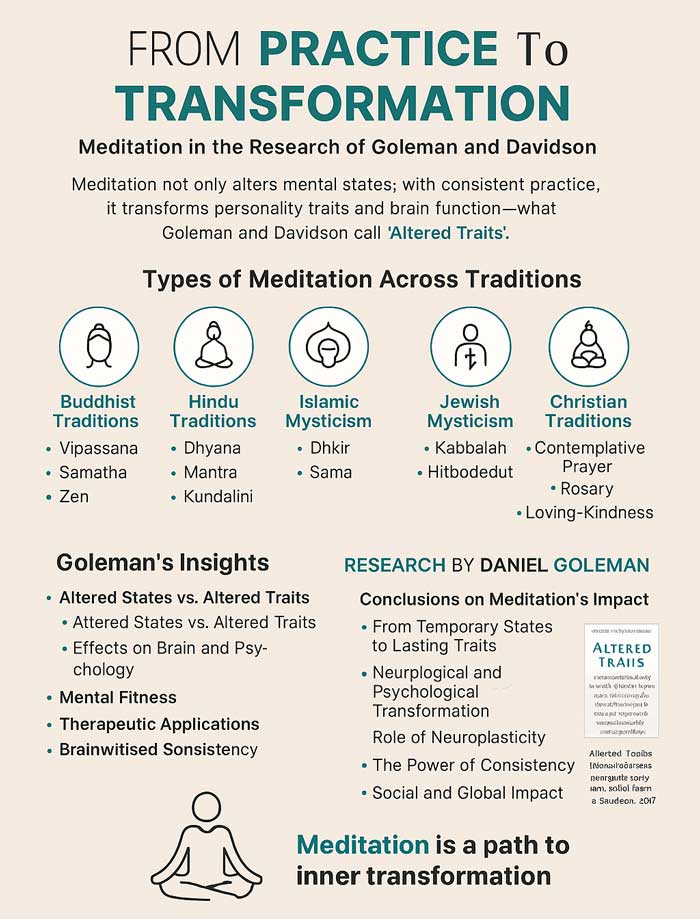
3. Islamic Mysticism (Sufism)
- Dhikr: Repetition of divine names to purify the heart and attain divine presence.
- Sama: Use of music and dance (e.g., Rumi’s whirling) to reach ecstatic states and connect with truth.
4. Jewish Mysticism
- Kabbalah: Mystical meditations focusing on Hebrew letters and divine concepts to uncover the secrets of creation.
- Hitbodedut: Personal, spontaneous dialogue with God in solitude—a deeply intimate form of meditation.
5. Christian Traditions
- Contemplative Prayer: Silent focus on God’s presence, sometimes using repeated prayers or scripture verses.
- Rosary: Repetitive prayer using beads to cultivate peace and spiritual focus.
6. Modern and Secular Approaches
- Mindfulness: Nonjudgmental awareness of thoughts and emotions—rooted in Buddhism but widely used in modern psychology.
- Loving-Kindness: Sending love and well-wishes to oneself and others to cultivate compassion.
Goleman’s Analysis of Differences and Commonalities
Goleman emphasizes that despite surface differences, all these traditions share a common goal: transforming consciousness and transcending the limited self.
He categorizes meditation into two main paths:
- Concentration: Focusing on a point, mantra, or breath to calm the mind.
- Insight: Observing the mind and body to understand reality and dissolve illusions.
Deeper Insights from Goleman
1. Altered States vs. Altered Traits
Goleman distinguishes between two key concepts:
- Altered States: Temporary shifts in consciousness from meditation, intense focus, or even psychedelics.
- Altered Traits: Long-term changes in personality, behavior, and brain function resulting from sustained meditation.
2. Effects on Brain and Psychology
- Meditation calms the amygdala, reducing stress reactivity.
- Even 10 minutes of daily mindfulness improves focus and reduces distractions.
- Long-term practice leads to structural brain changes, such as increased prefrontal cortex thickness and enhanced attention.
3. Mental Fitness
Goleman likens meditation to mental exercise: regular practice strengthens focus, emotional flexibility, and resilience.
4. Therapeutic Applications
- Meditation helps treat anxiety, depression, ADHD, and PTSD.
- Even children with special needs benefit from simple mindfulness techniques in classrooms.
5. Brainwave Studies of Expert Meditators
Goleman’s research shows that advanced meditators (e.g., Tibetan monks) exhibit unique brainwave patterns—unprecedented in neuroscience.
Goleman’s Conclusions on Meditation’s Impact
From Temporary States to Lasting Traits
Goleman asserts that meditation not only induces temporary states like calm or focus, but with consistent practice, it leads to enduring changes in personality and behavior—what he calls Altered Traits.
Neurological and Psychological Transformation
Based on extensive neuroscience research:
- Emotional regulation improves—people manage negative emotions more effectively.
- Attention and focus are enhanced—meditation strengthens brain regions responsible for attention.
- Empathy and compassion grow—individuals become more attuned to others.
- Self-awareness deepens—people connect more clearly with their thoughts and emotions.
Role of Neuroplasticity
Goleman explains that meditation leverages neuroplasticity—the brain’s ability to rewire itself—creating new mental and behavioral patterns through practice.
The Power of Consistency
- Even 5–10 minutes of daily meditation yields noticeable benefits.
- But long-term practice (thousands of hours) leads to profound and lasting changes in brain structure and personality.
Social and Global Impact
Goleman believes meditation transforms not only individuals but also relationships, workplaces, and societies. With increased empathy and reduced stress, people engage more ethically and harmoniously.
Final Reflection: Meditation as a Path to Inner Transformation
From Goleman’s perspective, meditation is far more than a momentary relaxation technique—it’s a mental discipline that, when sustained, leads to deep and lasting transformation in the brain and psyche.
By enhancing cognitive abilities like focus, emotional regulation, empathy, and self-awareness, meditation helps individuals become more balanced, conscious, and compassionate versions of themselves.
Scientific research shows that meditation not only reduces negative emotions but also creates new neural pathways that foster enduring positive traits. These changes—what Goleman calls Altered Traits—are the fruit of deep and consistent practice.
Ultimately, meditation is a bridge between science and spirituality—a tool for personal growth that calms the mind, opens the heart, and enriches human connection. For Goleman, it’s a path toward a more mindful, ethical, and humane life.
Source:
Altered Traits: Science Reveals How Meditation Changes Your Mind, Brain, and Body Authors: Daniel Goleman & Richard J. Davidson Publisher: Avery, New York – Year: 2017
از تمرین تا تحول(ویژگیهای دگرگونشده): مدیتیشن در پژوهشهای گولمن و دیویدسون
مدیتیشن نهتنها حالتهای ذهنی را تغییر میدهد، بلکه در صورت استمرار، ویژگیهای شخصیتی و عملکرد مغز را نیز دگرگون میسازد—این همان چیزی است که گولمن و دیویدسون آن را Altered Traits مینامند.
انواع مدیتیشن در مکاتب مختلف
۱. مدیتیشن در آیین بودایی
– ویپاسانا (Vipassana): مراقبهی بینشمحور که هدفش مشاهدهی دقیق نفس، احساسات و افکار برای درک حقیقت وجودی است.
– ساماته (Samatha): تمرکز بر یک شیء یا نفس برای رسیدن به آرامش ذهنی.
– ذن (Zen): تأکید بر سکوت، حضور در لحظه، و رها کردن تفکر تحلیلی. معمولاً با نشستن در حالت خاص و تمرکز بر تنفس همراه است.
۲. مراقبه در آیین هندو
– دهیانا (Dhyana): مراقبهی عمیق که در یوگا به عنوان یکی از مراحل هشتگانهی رشد معنوی مطرح میشود.
– مانترا (Mantra): تکرار واژههای مقدس مثل “اوم” برای تمرکز ذهن و اتصال به انرژی الهی.
– کوندالینی: مراقبهای برای بیدار کردن انرژی نهفته در ستون فقرات و بالا بردن آن از طریق چاکراها.
۳. مراقبه در عرفان اسلامی (تصوف)
– ذکر: تکرار نامهای الهی برای پاکسازی قلب و رسیدن به حضور الهی.
– سماع: استفاده از موسیقی و رقص (مثل رقص سماع مولوی) برای رسیدن به حالت وجد و اتصال با حقیقت.
۴. مراقبه در یهودیت
– کابالا: مراقبههای عرفانی با تمرکز بر حروف عبری و مفاهیم الهی برای درک اسرار خلقت.
– هیتبوددوت: گفتوگوی آزاد با خدا در خلوت، نوعی مراقبهی شخصی و ارتباط مستقیم با الهی.
۵. مراقبه در مسیحیت
– مراقبهی قلبی (Contemplative Prayer): سکوت و تمرکز بر حضور خداوند، گاهی با تکرار دعا یا آیهای از کتاب مقدس.
– روزیخوانی (Rosary): تکرار دعاها با مهرههای تسبیح برای تمرکز و آرامش.
۶. مراقبه در مکاتب مدرن و غیرمذهبی
– ذهنآگاهی (Mindfulness): مشاهدهی افکار و احساسات بدون قضاوت، برگرفته از بودیسم اما در روانشناسی مدرن بسیار رایج.
– مراقبهی محبتآمیز (Loving-kindness): تمرین ارسال عشق و آرزوی خوشبختی برای خود و دیگران.
تحلیل گولمن از تفاوتها و شباهتها
گولمن تأکید میکند که همهی این مکاتب، با وجود تفاوتهای ظاهری، هدفی مشترک دارند: تحول آگاهی و رهایی از خودِ محدود.
او مراقبهها را در دو مسیر اصلی دستهبندی میکند:
– آرامسازی (Concentration): تمرکز بر یک نقطه، مانترا یا نفس برای رسیدن به سکون ذهن.
– بینش (Insight): مشاهدهی دقیق ذهن و بدن برای درک حقیقت و رهایی از توهمات.
نکات تکمیلی و دیدگاههای عمیقتر گولمن
۱. تفاوت بین «حالتهای تغییر یافته» و «ویژگیهای تغییر یافته»
گولمن بین دو مفهوم مهم تمایز قائل میشود:
– Altered States: حالتهای موقتی آگاهی که در اثر مراقبه، تمرکز شدید یا حتی مواد روانگردان ایجاد میشوند.
– Altered Traits: تغییرات پایدار در شخصیت، رفتار و عملکرد مغز که در نتیجهی مراقبهی بلندمدت حاصل میشوند.
۲. تأثیر مراقبه بر مغز و روان
– مراقبه باعث آرامسازی آمیگدالا (مرکز واکنش به استرس در مغز) میشود و در نتیجه، فرد واکنشهای آرامتری به محرکهای استرسزا نشان میدهد.
– تمرین روزانهی ذهنآگاهی حتی به مدت ۱۰ دقیقه میتواند تمرکز را تقویت کرده و از حواسپرتیهای روزمره بکاهد.
– مراقبهی بلندمدت منجر به تغییرات ساختاری در مغز میشود، از جمله افزایش ضخامت قشر پیشپیشانی و بهبود عملکرد توجه.
۳. مراقبه به عنوان «تناسب ذهنی»
– گولمن مراقبه را مانند ورزش ذهنی میداند: تمرینی که با تکرار منظم، قدرت تمرکز، انعطافپذیری روانی و تابآوری در برابر استرس را افزایش میدهد.
۴. کاربردهای درمانی مراقبه
– مراقبه در درمان اضطراب، افسردگی، اختلال کمتوجهی (ADD) و اختلال استرس پس از سانحه (PTSD) مؤثر است.
– حتی کودکان با نیازهای ویژه میتوانند از تکنیکهای سادهی ذهنآگاهی در کلاس درس بهرهمند شوند.
۵. مطالعهی امواج مغزی مراقبهگران حرفهای
– گولمن در پژوهشهایی نشان داده که مراقبهگران سطح بالا (مثل راهبان تبتی) دارای الگوهای امواج مغزی منحصربهفردی هستند که در علم بیسابقه است.
نتیجهگیری دانیل گولمن دربارهی تأثیر مراقبه بر ذهن و روان، حاصل دههها تحقیق علمی و تجربهی شخصی اوست. او در کتاب Altered Trait (ویژگیهای دگرگونشده) که با همکاری ریچارد دیویدسون نوشته، به بررسی دقیق و علمی این تأثیرات پرداخته است.
نتیجهگیری: تأثیر مراقبه از نگاه دانیل گولمن
از حالتهای موقتی تا ویژگیهای پایدار
گولمن تأکید میکند که مراقبه نهتنها حالتهای ذهنی موقتی مانند آرامش یا تمرکز را ایجاد میکند، بلکه در صورت تمرین مداوم، میتواند منجر به تغییرات پایدار در شخصیت و رفتار شود. این تغییرات را او «ویژگیهای دگرگونشده» مینامد.
تغییرات مغزی و روانی
بر اساس تحقیقات گستردهی علوم اعصاب:
– تنظیم هیجانی بهبود مییابد؛ افراد بهتر میتوانند احساسات منفی را مدیریت کنند.
– تمرکز و توجه افزایش مییابد؛ مراقبه باعث تقویت نواحی مغزی مرتبط با توجه میشود.
– همدلی و شفقت رشد میکند؛ افراد توانایی بیشتری در درک و همراهی با دیگران پیدا میکنند.
– خودآگاهی عمیقتر میشود؛ فرد ارتباط بهتری با افکار و احساسات خود برقرار میکند.
نقش نوروپلاستیسیته (Neuroplasticity)
گولمن توضیح میدهد که مراقبه از طریق نوروپلاستیسیته، یعنی قابلیت تغییر و بازسازی شبکههای عصبی، باعث شکلگیری الگوهای جدید رفتاری و ذهنی میشود. این یعنی مغز میتواند با تمرین مراقبه، «بازآموزی» شود.
تأثیر زمان تمرین
– حتی ۵ تا ۱۰ دقیقه مراقبه روزانه میتواند تأثیرات قابلتوجهی داشته باشد.
– اما تمرینهای طولانیمدت (هزاران ساعت) منجر به تغییرات عمیقتر و پایدارتر در ساختار مغز و شخصیت میشود.
تأثیرات اجتماعی و جهانی
گولمن معتقد است مراقبه نهتنها فرد را متحول میکند، بلکه روابط اجتماعی، محیطهای کاری و حتی جوامع را نیز تحت تأثیر قرار میدهد. با افزایش همدلی و کاهش استرس، افراد تعاملات سالمتری دارند و تصمیمگیریهای اخلاقیتری انجام میدهند.
جمعبندی نهایی: مراقبه، راهی به سوی تحول درونی
از دیدگاه دانیل گولمن، مراقبه چیزی فراتر از یک تکنیک آرامسازی لحظهای است؛ این تمرین ذهنی، در صورت استمرار، میتواند به تحولی عمیق و پایدار در ساختار روانی و مغزی انسان منجر شود. مراقبه با تقویت تواناییهای شناختی مانند تمرکز، تنظیم هیجانی، همدلی و خودآگاهی، فرد را به نسخهای متعادلتر، آگاهتر و مهربانتر از خود تبدیل میکند.
تحقیقات علمی نشان میدهند که مراقبه نهتنها احساسات منفی را کاهش میدهد، بلکه مسیرهای عصبی جدیدی در مغز ایجاد میکند که منجر به شکلگیری ویژگیهای مثبت و پایدار در شخصیت فرد میشود. این تغییرات، که گولمن آنها را «ویژگیهای دگرگونشده» مینامد، حاصل تمرین مستمر و عمیق هستند.
در نهایت، مراقبه پلی است میان علم و معنویت؛ ابزاری برای رشد فردی که نهتنها ذهن را آرام میسازد، بلکه قلب را نیز گشودهتر و روابط انسانی را غنیتر میکند. از نگاه گولمن، مراقبه راهی است به سوی زندگی آگاهانهتر، اخلاقیتر و انسانیتر.
منبع:
Altered Traits: Science Reveals How Meditation Changes Your Mind, Brain, and Body نویسندگان: Daniel Goleman و Richard J. Davidson ناشر: Avery – سال انتشار: 2017
ویژگیهای دگرگونشده: علم نشان میدهد مراقبه چگونه ذهن، مغز و بدن شما را تغییر میدهد.